

Table of Contents
Struggling with overflowing cabinets and chaotic drawers? A disorganized kitchen can make daily tasks stressful and time-consuming. Thoughtful cabinet and drawer organization is key to a functional, beautiful kitchen. In this article, explore proven techniques and tips to simplify, streamline, and elevate your kitchen storage—making every meal prep a breeze.
Assessing Your Kitchen Storage Needs
Before embarking on a kitchen reorganization, it’s crucial to take a step back and thoughtfully examine what truly occupies your cabinets and drawers. Start by taking everything out—yes, every pot, pan, spice jar, and gadget. This hands-on inventory allows you to see the scope of what you own and spot duplicates, rarely used tools, and forgotten items languishing in the back. As you go through each item, ask yourself if you use it regularly, seasonally, or scarcely at all. Consider whether it genuinely serves your current cooking habits or if it’s simply taking up valuable real estate.
Be honest about what belongs in your kitchen. If you haven’t used a certain appliance or serving dish in over a year, it’s time to consider donating it or repurposing it elsewhere in your home. Set aside a donation box for items still in good condition—these can find new life in someone else’s kitchen. For goods past their prime, responsibly recycle or dispose of them. This decluttering stage not only frees up space but also brings clarity to what you actually need within reach.
As you sort, begin to categorize your items. Place frequently used essentials, like your favorite knife or daily coffee mug, in one group, while special-occasion cookware or holiday platters go in another. Seasonal and rarely used items can be stored higher up or deeper in cabinets. By defining what you use most and least, you’re able to customize your storage for convenience and efficiency. This initial assessment—paring down, grouping, and prioritizing—forms a clear foundation upon which a streamlined, lasting organizational system can be built, setting the stage for a functional, thoughtful kitchen layout in the next step.
Planning a Functional Layout
After streamlining your kitchen essentials, the next step is to strategically plan how and where to store each item for optimal workflow, accessibility, and efficiency. The foundation of an effective kitchen layout is rooted in the work triangle concept—the imaginary lines connecting your sink, stove, and refrigerator. Arranging your cabinets and drawers so that your most-used items align with these pivotal stations significantly reduces unnecessary movements and maximizes productivity.
Begin by grouping similar items and assigning practical zones for prep, cooking, and cleaning. Place prep tools, mixing bowls, knives, and cutting boards in drawers and cabinets close to your primary countertop or island space, ensuring these essentials are at arm’s reach during food preparation. Reserve cabinetry around the range or cooktop for pots, pans, cooking utensils, and spices. Store dishware, glasses, and cutlery near the cleaning zone or dishwasher to streamline unloading and setting the table.
Organize drawers so that everyday cutlery and tools are in the top drawers for easy access, with less frequently used appliances and bakeware in lower drawers or cabinets. Interior cabinet organization is equally important—store seldom-used party platters and specialty gadgets in out-of-the-way spots, while everyday plates, bowls, and cups remain front and center.
Adopt the principle of storing items where you use them most. For example, keep trash bags and cleaning supplies beneath the sink, and position food storage containers close to the food prep and serving areas. Keep like-items together, but separate by category when necessary—such as baking supplies in one drawer, and meal prep gadgets in another.
Thoughtful zoning not only prevents clutter from returning but also transforms your kitchen into a system of intuitive, efficient routines—setting the stage for maximizing every inch of storage space in the chapters ahead.
Maximizing Cabinet Space
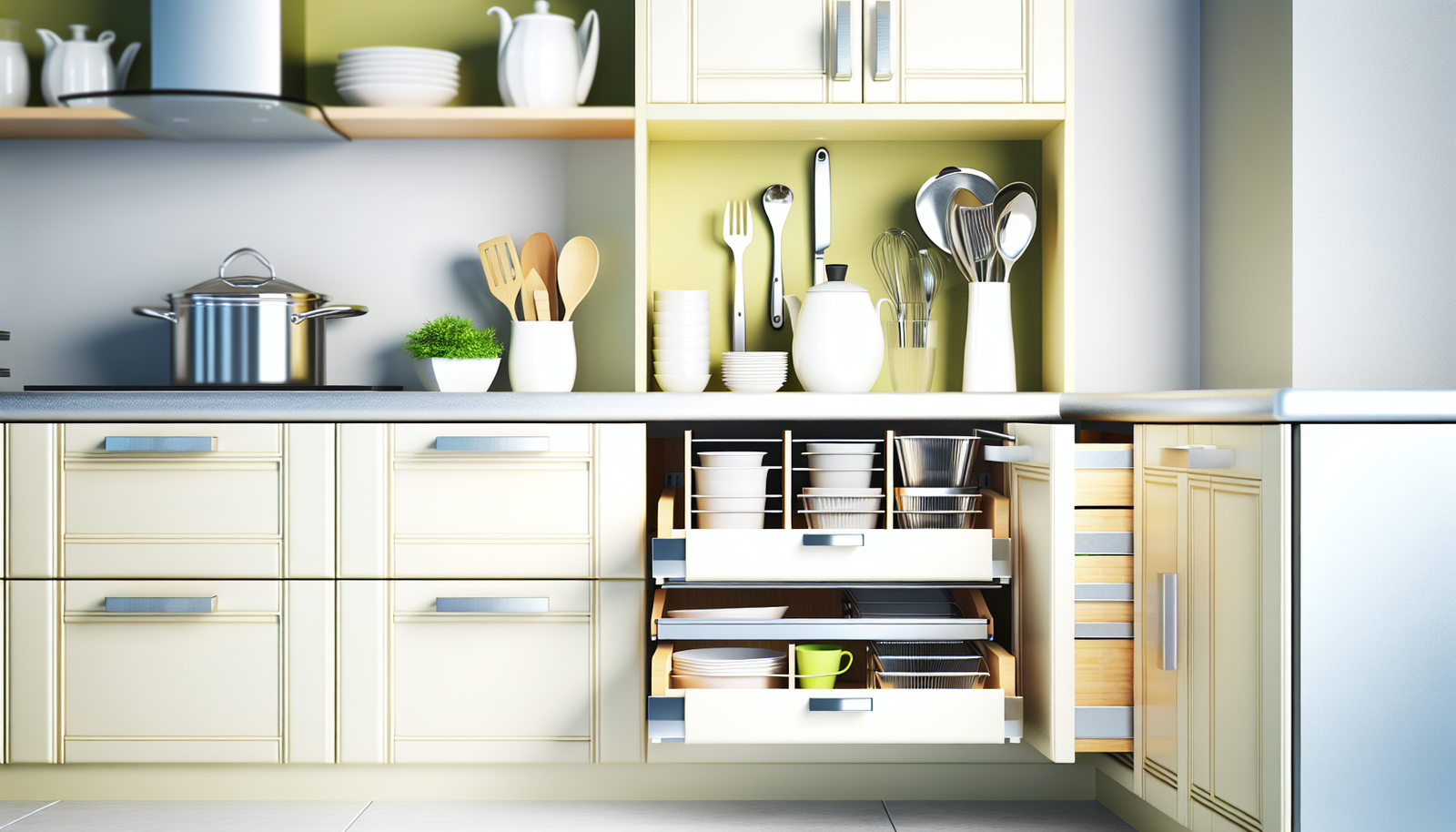
Making the most of your kitchen cabinet space requires a blend of creativity and smart products. Start by reimagining the vertical space in both upper and lower cabinets. For example, stackable risers create extra levels, allowing you to separate plates, bowls, mugs, or canned goods without turning the space into a jumble. In deep base cabinets, pull-out shelves are transformative—these sliding trays bring items at the back into easy reach, removing the need for awkward bending or rummaging.
Pots, pans, and their lids are notorious for gobbling up space and causing chaos. Vertical dividers installed within lower cabinets or wide drawers give each pan and lid a dedicated slot, making them visible and accessible. For those stubborn corners in base cabinets, lazy Susans are invaluable for storing larger items like small appliances, oils, or condiments, eliminating the dead space that’s usually hard to access.
Door-mounted organizers deliver hidden yet highly practical storage. Attach slim racks to the inside of cabinet doors for spices, wraps, or cleaning supplies. In under-sink areas—often crowded with pipes and awkwardly shaped—customizable caddies or tiered trays can corral bottles, sponges, and scrubbers, keeping essentials upright and organized rather than sprawling across the bottom.
Upper cabinets benefit from plate racks and shelf risers to separate delicate dishes and maximize reach. Reserve higher shelves for infrequently used items. Group pantry goods in clear bins or baskets by category, then slide them out as needed, always knowing what’s in stock. With systematic use of risers, dividers, organizers, and smart shelving, every available inch can be harnessed for efficient, clutter-free storage, setting a solid foundation for streamlined drawer organization up next.
Optimizing Drawer Organization
Turning kitchen drawers from clutter-prone spaces into models of functionality involves both strategic planning and the right tools. Begin by emptying each drawer and assessing what truly belongs: reserve these spaces for utensils, gadgets, and kitchen tools that require quick, easy access. Eliminating unused or duplicate items ensures only essentials remain, making the next steps far more effective.
Once sorted, integrate drawer dividers to create categorized zones for different items. Adjustable dividers, available in various materials, let you tailor compartments for everything from spatulas to bottle openers. For cutlery, opt for a sturdy insert with designated slots for knives, forks, and spoons. This not only protects blades and tines but also streamlines the retrieval process during meal prep and serving.
Consider stackable trays for small gadgets and baking tools. These double your usable space and keep items like measuring cups, peelers, or pastry brushes separated yet visible. For extra-deep or awkwardly shaped drawers, custom inserts can be designed to accommodate unique collections, such as specialty whisks or citrus juicers, ensuring even irregular items have a proper home.
To prevent jumbles, group similar utensils together—think all baking tools in one tray, frequently-used cooking gadgets in another. Place high-use items near the drawer front and less frequently needed ones toward the back, promoting efficiency.
Labeling is a game-changer for sustaining order. Use printed or hand-written labels on drawer lips or inside organizers to indicate contents. This simple step ensures every item is returned to its rightful spot, making it easy for all household members to participate in maintaining organization.
Finally, set aside a small section or tray for miscellaneous items like bag clips or corn holders, but routinely audit this space so it never becomes a catch-all again. With these thoughtful methods, kitchen drawers become a reliable foundation for effortless cooking and smooth routines.
Maintaining an Organized Kitchen Long-Term
Maintaining an organized kitchen over the long term requires a mindful approach and sustainable routines that seamlessly integrate into your daily life. After the effort invested in optimizing your cabinets and drawers, developing habits that reinforce order is crucial. Start by embracing a *regular review* schedule—take a few minutes each week to scan your storage areas for misplaced items, spills, or developing clutter. This helps address minor disorganization before it becomes overwhelming.
Every few months, dedicate time for *seasonal decluttering*. As cooking habits change with the seasons, items that were once in frequent use may become less relevant. Use this opportunity to reevaluate what belongs in your kitchen and to donate or store away gadgets, utensils, or containers that are no longer serving you. This practice not only clears space but also makes room for new tools that fit your evolving culinary interests.
A highly effective habit is adopting a *one-in, one-out policy*. Every time a new item comes into the kitchen—a tool, dish, or container—remove an equivalent item that no longer earns its keep. This prevents excess accumulation and encourages thoughtful consumption.
Ensuring every household member participates in maintaining order is vital. Share the organizational logic behind where items belong and why—a quick family meeting or a printed list on the pantry door can be effective. Encourage everyone to return items to their designated spots and to speak up if a system isn’t working, fostering collaboration and ownership.
Finally, build organization into your daily routine. Use the last few minutes after dinner to return utensils and gadgets to their place. Reinforce these routines by visual cues—keep counters clear and cabinet fronts tidy, making clutter easily noticeable. With these sustainable habits, your kitchen will remain consistently functional, efficient, and a joy to use.
Conclusions
Organized kitchen cabinets and drawers not only save time but also enhance cooking enjoyment and safety. By assessing your needs, planning purposeful layouts, maximizing storage, and implementing sustainable habits, you create a clutter-free, efficient kitchen environment. Commit to ongoing tidiness and your kitchen will remain a joyful space at the heart of your home.