

Table of Contents
Clean Wooden Cutting Board the Right Way: Expert Methods for Long-Lasting Hygiene
To keep your kitchen safe and your tools in peak condition, it’s essential to clean wooden cutting board surfaces properly after every use. Wooden cutting boards are kitchen essentials valued for their durability, natural beauty, and knife-friendly qualities. However, proper cleaning and maintenance are crucial to avoid stains, odors, and bacteria buildup. In this expert guide, we’ll walk you through the best cleaning techniques to ensure your wooden board stays sanitary, strong, and ready for years of daily use.
Understanding the Unique Qualities of Wooden Cutting Boards
Wooden cutting boards stand out due to their remarkable structure, durability, and performance in the kitchen. Their superiority starts with the wood selection. Popular choices like maple, walnut, cherry, and teak are chosen not just for appearance but for their tightly packed grain structures. This tight grain makes it harder for moisture, bacteria, and food particles to penetrate deeply into the surface.
Hard maple remains a classic favorite due to its fine, closed pores. It resists deep cuts, helping reduce areas where bacteria might hide. Walnut and cherry offer moderate hardness and smooth surfaces that remain gentle on knife edges. Teak, known for its natural oils, has exceptional resistance to water and warping, making it ideal for long-term use.
One of the major reasons cooks prefer wood over plastic is its natural antimicrobial properties. Studies show that certain hardwoods inhibit bacterial survival. In fact, wood absorbs bacteria into its fibers, where they eventually die off — a phenomenon that makes wooden boards surprisingly sanitary when cared for correctly.
The grain structure also contributes to knife-friendliness. High-quality woods have a self-healing nature; minor cuts swell shut over time. Plastic boards, by contrast, form deep grooves that trap bacteria. However, not all woods are safe: open-pored woods or species containing natural toxins can harbor bacteria or transfer unwanted substances into food. This makes proper wood selection essential.
Daily Cleaning Practices for Hygiene and Longevity
Everyday care is key to keeping your board safe and functional. After each use, begin by removing food debris with a soft brush or sponge. To clean wooden cutting board surfaces effectively, use mild dish soap and warm water, scrubbing both sides thoroughly. This helps preserve wood’s natural sanitizing properties.
Avoid aggressive tools like steel wool or harsh scrubbing pads that may gouge the wood. Deep scratches give bacteria places to hide. Equally important: never soak a wooden cutting board or put it in the dishwasher. Prolonged exposure to water can cause swelling, warping, and cracking.
Once cleaned, rinse thoroughly and dry immediately with a towel. Always stand the board upright to air-dry. Leaving it flat on a damp surface can lead to mold, odors, and discoloration. Consistent cleaning and proper drying preserve the board’s structural integrity and prepare it for deeper cleaning when needed.
Deep Cleaning to Remove Odors and Stains
When everyday cleaning isn’t enough — especially after cutting pungent foods like garlic, onions, or raw meat — a deeper cleaning restores freshness and hygiene. According to FoodSafety.gov, proper sanitation practices significantly reduce the risk of cross-contamination in home kitchens, which makes deep cleaning essential for wooden boards.
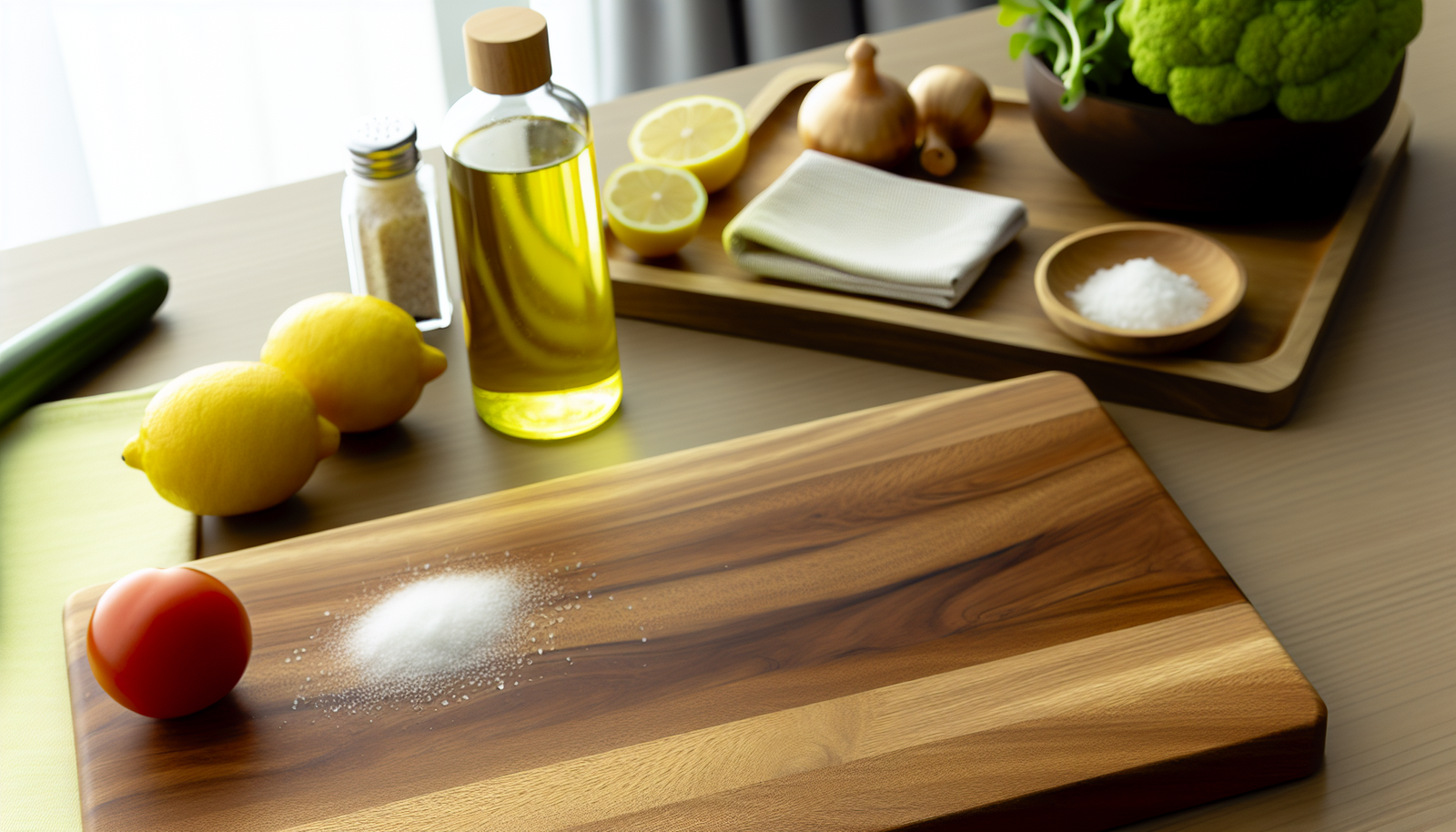
Begin by sprinkling coarse salt or baking soda across the surface. These natural abrasives help remove stains and embedded residue.
Cut a lemon in half and scrub the board using the lemon’s cut side. Lemon juice provides antibacterial benefits while neutralizing strong odors. For tougher stains or strong food smells, apply a small amount of white vinegar using a clean cloth. Vinegar disinfects and removes lingering odors — but avoid soaking the board, as excess moisture damages wood fibers.
After deep cleaning, wipe the board with a damp cloth, then dry immediately and stand it upright. Using natural cleaning agents preserves your board without stripping its oils or damaging its finish.
Oiling and Conditioning for Enhanced Durability
Cleaning alone isn’t enough — conditioning your board maintains its long-term strength and beauty. Wood dries out naturally over time, making it vulnerable to cracking or splitting. Oiling creates a protective barrier that retains moisture while blocking excess water and contaminants.
Always choose food-safe mineral oil, beeswax, or a cutting-board conditioning cream. Avoid vegetable and olive oils, which can go rancid and cause unpleasant odors.
Make sure the board is fully dry before applying oil. Pour a generous amount on the surface, then work it into the grain using a cloth. Pay extra attention to edges and end-grain sections. Allow the board to absorb the oil for several hours or overnight. Once absorbed, buff off excess oil for a clean, smooth finish.
Repeat this process every few weeks or whenever the board looks dry. Conditioning strengthens the surface, reduces cracking, and keeps the board’s texture smooth and resilient.
Preventing Damage and Knowing When to Replace Your Board
Preventing damage helps your clean wooden cutting board last for years. Use sharp knives to avoid unnecessary force that creates deep cuts. After heavy chopping, inspect the board for deep marks. Minor scratches can be sanded smooth using fine-grit sandpaper.
Prevent cross-contamination by using separate boards for raw meats and produce. If space is limited, ensure thorough washing and sanitizing between uses.
Always avoid soaking, dishwashers, bleach, or harsh detergents. These weaken fibers, warp the board, and cause cracks. Instead, rely on mild soap, warm water, and proper drying.
Even with excellent care, all boards eventually need replacing. Signs include persistent odors, recurring mold spots, deep uncleanable cracks, or excessive warping. When these issues appear, it’s time for a new board to ensure safety and hygiene.
Conclusions
With proper care, a wooden cutting board can last for many years. By learning how to clean wooden cutting board surfaces effectively — including daily cleaning, deep sanitizing, and regular oiling — you preserve its durability, beauty, and sanitary qualities. These practices keep your board safe, functional, and a pleasure to use for every meal you prepare.